Forest Honey: Nature’s Sweet Gift from the Wild
Honey has been enjoyed for generations—not only because of its naturally sweet taste, but also because of its distinctive aroma, colour and character. Among the different varieties available today, forest honey stands out for its connection with natural landscapes and diverse flowering plants.
But what exactly is forest honey? How is it different from ordinary honey? And what should you look for when choosing pure natural honey?
Let’s explore.
What Is Forest Honey?
Forest honey is honey produced by bees that collect nectar from flowering plants and trees found in forest and natural vegetation areas.
Unlike honey associated with a single cultivated crop, honey collected from diverse natural vegetation can have a distinctive combination of flavour, aroma and colour depending on the plants available to bees during the collection period.
FSSAI allows honey to be described according to a floral or plant source when the product actually comes from that source and has the corresponding characteristics.
This is one reason why honey from different regions can look and taste noticeably different.
Why Does Forest Honey Taste Different?
One of the most interesting things about natural honey is that no two batches necessarily have exactly the same character.
The flavour and aroma can be influenced by:
- The flowers visited by bees
- The surrounding vegetation
- The season
- The geographical region
- Weather conditions
- Natural variation between harvests
This can result in honey ranging from light and delicate to darker, richer and more intense in flavour.
That natural variation is part of what makes genuine honey interesting.
What Makes Pure Honey Different?
When people search for pure honey, they are generally looking for honey without unnecessary additions.
Under India’s food standards, honey sold as honey should not have food ingredients or additives added to it, and it should not be heated or processed to such an extent that its essential composition is changed or its quality is impaired.
Therefore, when buying honey, it is important to look beyond attractive packaging and check:
1. Ingredient Information
Check the product label and ingredient declaration.
2. Source
A trustworthy seller should clearly communicate where the honey comes from and what type of honey it is.
3. Processing
Understand whether the honey has been filtered, processed or heated and what the brand means by terms such as raw or unprocessed.
4. Food Safety Information
Look for appropriate food-business and product information on the packaging.
FSSAI maintains specific standards and testing methods for honey, including parameters such as moisture, sugars, HMF, diastase activity and pollen/plant elements.
Is Darker Honey Better Than Lighter Honey?
Not necessarily.
Honey can naturally vary in colour from relatively light shades to deeper amber tones. Colour alone should not be treated as proof that one honey is better or purer than another.
The characteristics of honey depend on its floral and geographical source, among other factors.
So instead of judging honey only by colour, consider its source, ingredients, processing information and quality documentation.
How to Use Honey in Everyday Life
Honey is incredibly versatile and can easily become part of everyday meals.
🍯 With Warm Water
A spoonful of honey can be used as a natural sweetener in a morning drink.
🥣 With Breakfast
Add honey to oats, yoghurt, fruit or other breakfast foods.
🍞 With Toast
Honey makes a simple and delicious spread for toast and bread.
🥛 In Milk or Beverages
It can be used as a sweetener in suitable beverages.
🍵 In Tea
Many people enjoy honey as an alternative sweetener in tea.
🍰 In Recipes
Honey can also be incorporated into homemade desserts and recipes.
Tip: If you are adding honey to a hot beverage, allow it to cool somewhat rather than exposing honey unnecessarily to very high temperatures.
Raw Honey vs Processed Honey: What Should You Know?
The terms “raw honey” and “unprocessed honey” are commonly used by honey brands, but consumers should always check what the particular seller means by these terms.
Processing can involve steps such as filtration or handling, while excessive heating can affect honey’s characteristics. FSSAI specifically states that honey should not be heated or processed to the extent that its essential composition is changed or its quality impaired.
Therefore, don’t choose honey simply because a label says “raw.” Look at the actual product information and processing practices.
How to Store Honey Properly
Good storage helps maintain the quality and characteristics of honey.
Keep your honey:
- In a clean, tightly closed container
- Away from excessive heat
- Away from direct sunlight
- In a dry place
- Using a clean, dry spoon
Natural honey can sometimes crystallize. Crystallization does not automatically mean that honey has gone bad. The appearance and texture of honey can naturally change over time.
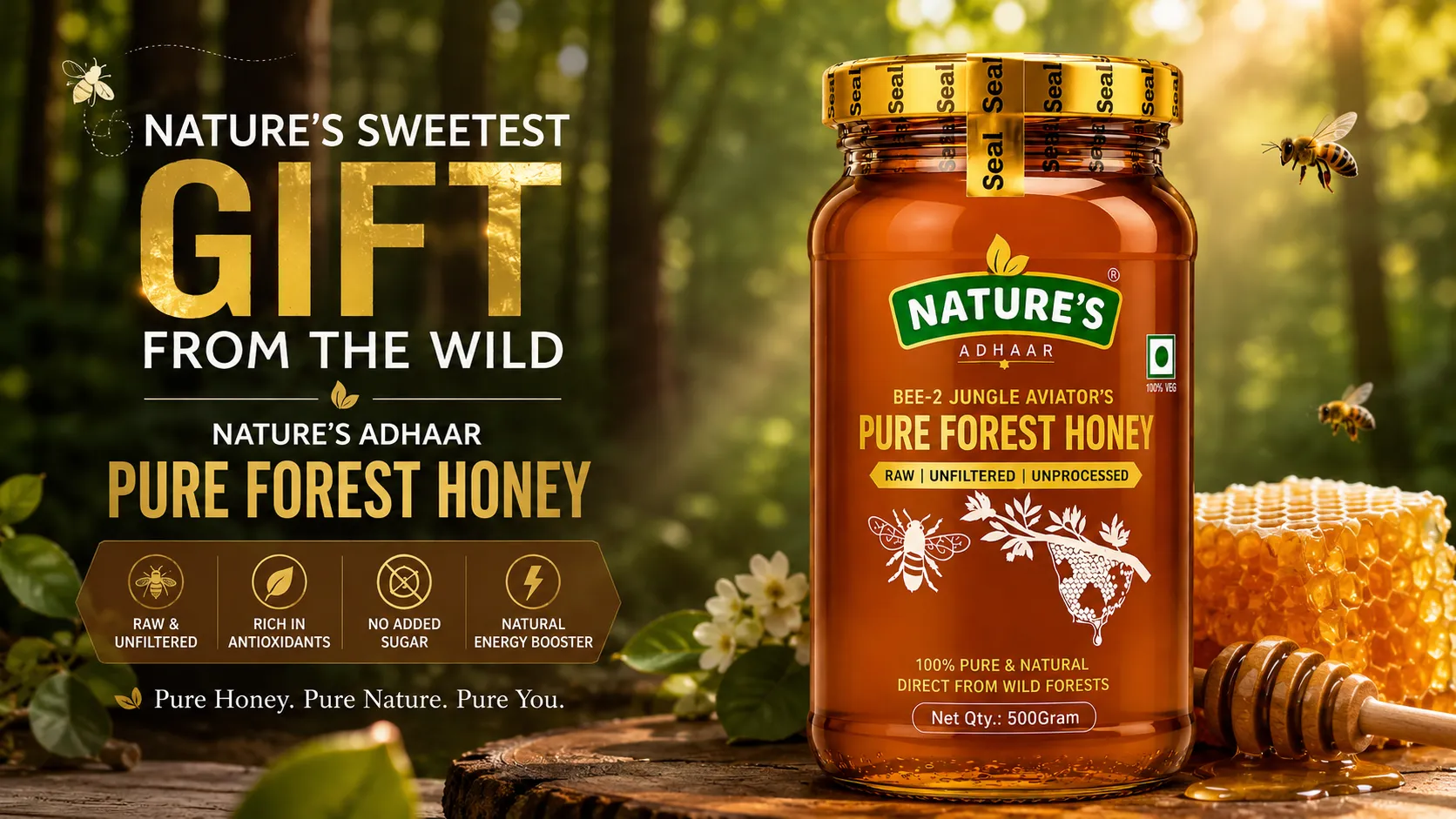
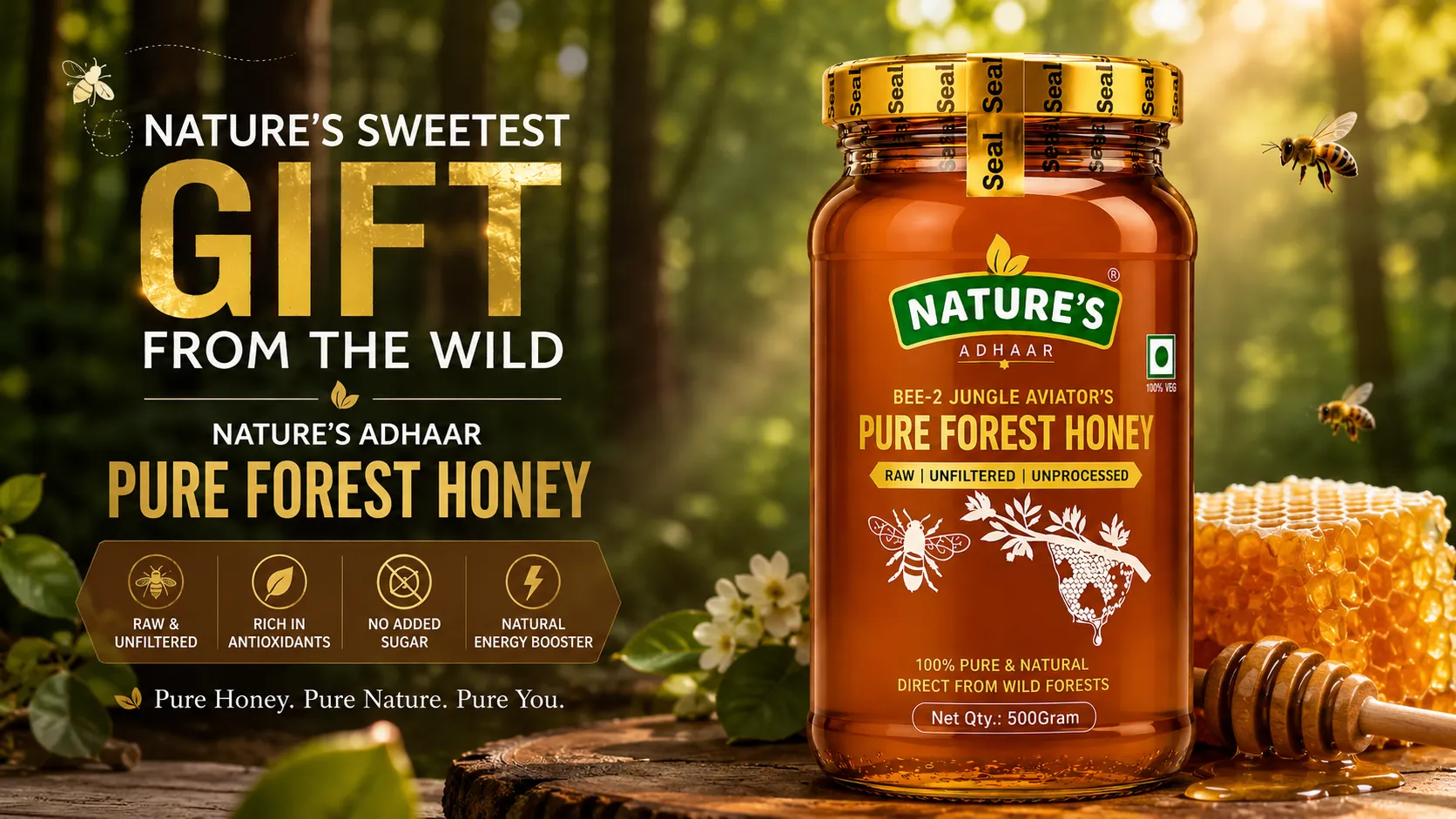
Why Choose Nature’s Adhaar Forest Honey?
At Nature’s Adhaar, our focus is on bringing naturally sourced food products closer to consumers while maintaining transparency about the product and its origin.
Our Forest Honey is selected with an emphasis on natural character, flavour and quality.
We believe good honey doesn’t need exaggerated promises. It should let its natural taste, aroma and quality speak for itself.
👉 Explore Nature’s Adhaar Forest Honey and discover the natural sweetness of honey from the wild.
Final Thoughts
Forest honey is more than just a sweetener. Its character reflects the plants, flowers, season and environment from which bees collect nectar.
When choosing honey, don’t focus only on words such as pure, natural or raw. Instead, look at the source, ingredients, processing information, food-safety details and overall transparency of the brand.
And most importantly, enjoy honey as what it fundamentally is—a naturally produced food with its own unique flavour and character.
🍯 Nature’s Adhaar
From Nature to Your Table — Naturally.
Leave a Reply